Oil Immersed Transformer

Oil Immersed Transformer: Complete Technical Guide to Oil-Type Transformers

An oil immersed transformer is a power transformer in which the windings and core are immersed in insulating mineral oil that simultaneously provides dielectric insulation and heat dissipation for the active parts. This guide explains the two main construction families of oil-type transformers — hermetically sealed units and expansion tank (conservator) units — along with their internal components, cooling methods, protection features, and the criteria buyers should use to select the right unit for medium voltage distribution networks. The content is written for procurement engineers, EPC contractors, and utility buyers sourcing transformers for projects across the Middle East and Gulf region including Egypt and Saudi Arabia, North Africa, CIS countries, and Sub-Saharan Africa, where humid coastal climates, dusty inland environments, and maintenance-limited rural sites all influence the choice of transformer construction.
Oil Immersed Transformer — schematic
Oil Immersed Transformer — schematic.

Why Oil Is Used as the Insulating and Cooling Medium

In an oil immersed transformer, the oil performs two functions at once: it insulates the live conductive parts from each other and from the tank, and it transfers heat generated by copper losses and core losses away from the windings toward the tank walls, where it dissipates into the surrounding air. The oil used is a high-grade mineral insulating oil, specially refined to deliver strong dielectric strength, good thermal stability, and efficient heat transfer. Because the oil is in direct contact with the winding insulation paper, its condition — moisture content, oxidation level, dielectric strength — has a direct impact on the transformer’s insulation life. This is the core reason why the two construction types described below (hermetically sealed and expansion tank) exist: each represents a different strategy for managing the oil’s exposure to the outside atmosphere over the transformer’s service life.
Selection reference
Selection reference.

Two Main Types of Oil-Type Transformers

Hermetically Sealed Transformer

A hermetically sealed transformer is filled with transformer oil under vacuum and then completely sealed from the external atmosphere. There is no expansion tank (conservator) open to outside air; instead, the tank is built with flexible corrugated wave walls that expand and contract to absorb the thermal expansion and contraction of the oil as load and ambient temperature change. Because the oil never contacts outside air, humidity, dust, or oxygen, the risks of oil oxidation, moisture absorption, and progressive insulation degradation are significantly reduced. This is currently the most widely used oil-filled transformer design in distribution networks, valued for its lower cost, high reliability, and strong performance in outdoor and harsh operating environments.

Because the system is fully sealed, hermetically sealed transformers do not need an expansion tank, a Buchholz relay, or a silica gel breather — components that conventional open-oil designs require to manage moisture ingress.

Expansion Tank (Conservator) Type Transformer

In an expansion tank type transformer, the main tank is connected to a conservator tank that sits above it and remains open to the atmosphere through a breathing path. As the oil heats up during operation, it expands and flows into the conservator; as it cools, the oil level drops back. Because this is an open system, it requires additional protective components — a Buchholz relay to detect gas accumulation and internal faults, and a silica gel breather to dry the air drawn in and out of the conservator as oil volume changes. Despite these protective devices, moisture and contaminants can gradually enter the oil over the transformer’s life, which can reduce insulation quality and shorten service life compared with a fully sealed design.

Structure and Main Components

A hermetically sealed oil immersed transformer is built from the following core components:

  • Copper or aluminum windings
  • Grain-oriented silicon steel core
  • High-quality mineral transformer oil for insulation and cooling
  • Corrugated wave-wall tank (absorbs oil expansion without a conservator)
  • Off-load or on-load tap changer
  • High voltage and low voltage cable bushings
  • Electronic protection relay, typically fitted above 400 kVA
  • Pressure relief valve
  • Oil temperature indicator with contacts
  • Wheels for transportation

Because the hermetic design eliminates the need for an expansion tank, Buchholz relay, and silica gel breather, the overall structure is simpler, which reduces routine maintenance requirements and improves long-term operational reliability.

Cooling Methods

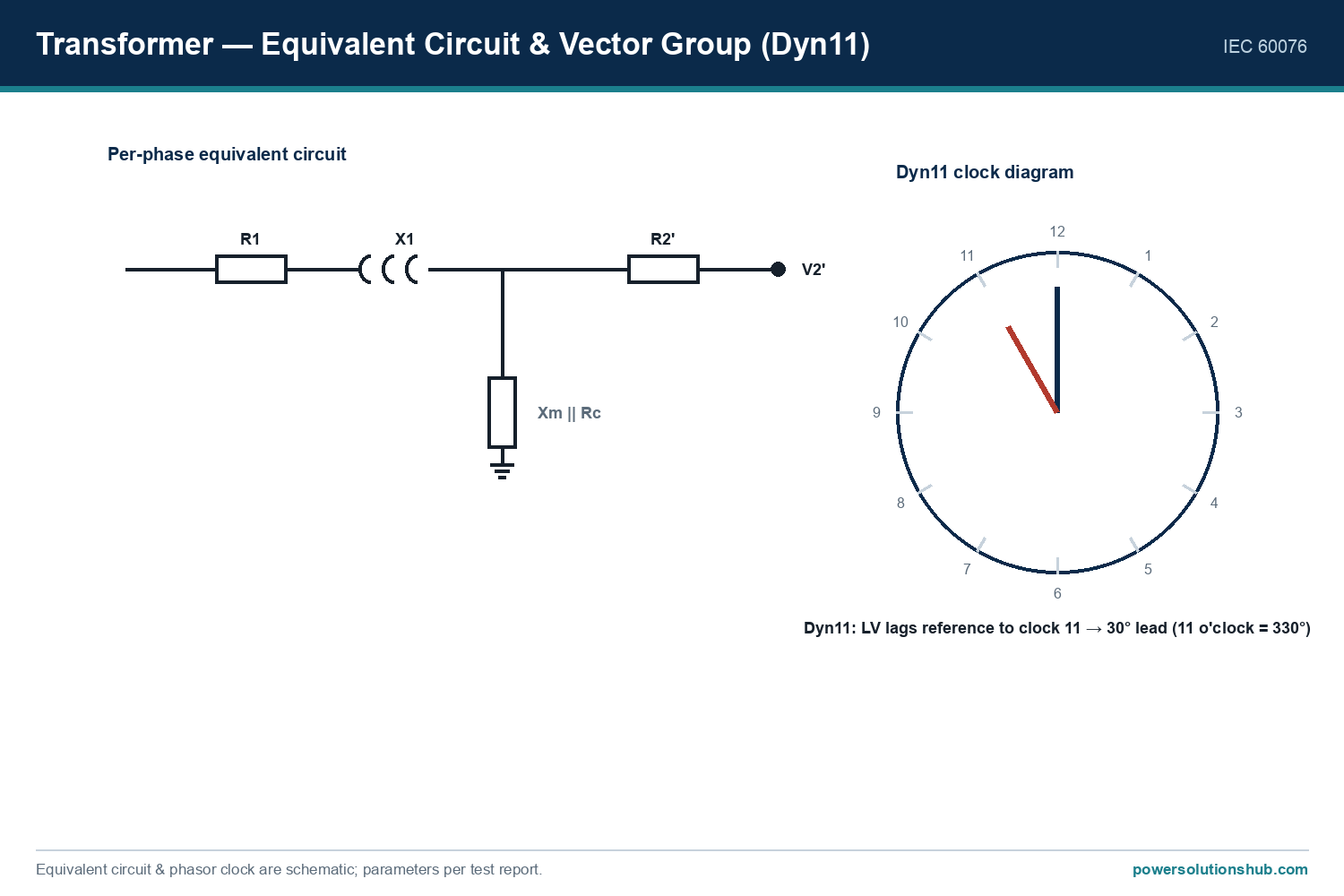
Oil immersed transformers rely on natural or forced circulation of oil and air to remove heat generated by copper and core losses. Hermetically sealed transformers are typically cooled using the ONAN (Oil Natural Air Natural) method, where the corrugated wave walls of the tank increase the effective cooling surface area and allow natural convection of surrounding air to dissipate heat. For higher power ratings or increased load conditions, ONAF (Oil Natural Air Forced) cooling, which adds fans to improve airflow across the tank surface, can be applied to boost heat transfer capacity.

Effective cooling is not a secondary consideration — if internal temperature rises too high, it can damage the paper insulation system and degrade oil quality, directly shortening transformer life.

Cooling Code Reference

Letter Meaning
O Oil
A Air
W Water
N Natural
F Forced

Comparison Table: Hermetically Sealed vs Expansion Tank Type

Feature Hermetically Sealed Transformer Expansion Tank (Conservator) Type
Contact with outside air None — fully sealed under vacuum Open connection via conservator
Expansion tank required No Yes
Buchholz relay required No Yes
Silica gel breather required No Yes
Tank design Corrugated wave-wall tank Plain tank + separate conservator
Moisture/oxidation risk over time Significantly reduced Higher over long service periods
Typical cooling ONAN, optional ONAF ONAN, optional ONAF
Maintenance profile Lower Higher (breather, relay checks)
Best-fit environments Humid, dusty, maintenance-difficult sites Sites with regular maintenance access

Typical Power Ratings and Applications

Hermetically sealed transformers are commonly manufactured up to 2500 kVA for distribution network applications. They are widely preferred in concrete kiosk substations up to 1600 kVA. These ratings make the design suitable for:

  • Public and private distribution substations
  • Concrete kiosk-type prefabricated substations
  • Industrial plants requiring outdoor, low-maintenance transformers
  • Utility networks in humid coastal or dusty inland climates
  • Remote or maintenance-difficult project sites where a Buchholz relay and breather servicing routine is impractical

Protection and Monitoring

Above 400 kVA, hermetically sealed transformers are usually equipped with an electronic protection relay. This relay continuously monitors gas accumulation, oil temperature, and internal tank pressure, and issues alarm and trip signals to the medium voltage switchgear to protect the transformer against developing faults before they escalate into failures. This monitoring layer, combined with the pressure relief valve and oil temperature indicator built into the standard component list, gives buyers a layered protection scheme without relying on the mechanical Buchholz relay used in conservator-type units.

Selection Criteria for Buyers

When specifying an oil immersed transformer for a distribution or industrial project, buyers should evaluate:

  • Environmental exposure: humid, coastal, or dusty sites favor the hermetically sealed design because it isolates the oil from ambient moisture and contamination.
  • Maintenance access: remote or low-maintenance-capacity sites benefit from the simpler hermetic structure that removes the breather and Buchholz relay servicing burden.
  • Power rating range: confirm the required kVA rating fits within the manufacturer’s hermetically sealed product range, noting that this construction is commonly offered up to 2500 kVA.
  • Substation type: for concrete kiosk substations, verify compatibility with ratings up to 1600 kVA, a common configuration in this segment.
  • Cooling class: ONAN is standard; specify ONAF with fans if the load profile or ambient temperature demands additional forced-air cooling capacity.
  • Protection scheme: confirm whether an electronic protection relay is included, particularly for units above 400 kVA.
  • Winding material: copper or aluminum, selected based on load profile, cost target, and thermal performance requirements.
  • Tap changer type: off-load or on-load tap changer, depending on whether voltage regulation must occur under energized conditions.

Efficiency and Service Life

Hermetically sealed oil-type transformers are widely regarded as the most popular choice for outdoor and industrial applications due to their robustness, high efficiency of approximately 99%, and long operational life. This efficiency level, combined with the reduced moisture and oxidation risk of the sealed design, gives utilities and industrial operators a dependable long-term asset with a lower total cost of ownership compared to open-oil designs requiring ongoing breather and relay maintenance.

Standards and Compliance

In Turkey, hermetically sealed transformers must comply with the TEDAŞ MLZ/99.032E technical specification. Buyers sourcing for export markets should confirm the applicable national or utility-specific technical specification for their project country, alongside the manufacturer’s own quality and testing documentation, since local grid codes and substation standards vary across the Middle East, Gulf, North Africa, CIS, and Sub-Saharan African markets.

Related guides

See also our guides on gas-insulated switchgear, ring main units and metal-clad switchgear.

What is an oil immersed transformer?

An oil immersed transformer is a power transformer whose core and windings are submerged in insulating mineral oil, which provides both electrical insulation and heat dissipation for the active parts.

What is the difference between a hermetically sealed transformer and an expansion tank transformer?

A hermetically sealed transformer is filled under vacuum and fully sealed with a corrugated wave-wall tank, eliminating the need for a conservator, Buchholz relay, and silica gel breather. An expansion tank type transformer uses an open conservator connected to the atmosphere, requiring those additional components to manage moisture.

What type of oil is used in an oil immersed transformer?

Oil immersed transformers use high-grade mineral insulating oil, refined to provide strong dielectric strength, thermal stability, and effective heat transfer for both insulation and cooling functions.

What cooling method do hermetically sealed transformers use?

They are typically cooled using the ONAN (Oil Natural Air Natural) method, with the corrugated tank walls increasing cooling surface area; ONAF (Oil Natural Air Forced) cooling with fans can be added for higher loads.

What is the maximum power rating for hermetically sealed transformers?

They are commonly manufactured up to 2500 kVA for distribution networks and are widely used in concrete kiosk substations up to 1600 kVA.

Do hermetically sealed transformers need a Buchholz relay?

No. Because the tank is completely sealed and filled under vacuum, there is no need for an expansion tank, Buchholz relay, or silica gel breather, unlike conventional expansion tank type transformers.

How efficient are oil-type transformers?

Hermetically sealed oil-type transformers offer high efficiency of approximately 99%, along with robustness and long operational life, making them a preferred choice for outdoor and industrial applications.

Looking for Oil-Type Transformers?

Looking for high-quality oil-type transformers? We provide expert engineering support and reliable products for all your medium voltage needs.

For quotations and requests: info@electricistanbul.com

WhatsApp: +90 501 076 69 91
transformer_paralel

What is a Transformer? Electrical Transformer Working Principle and Types

What is a Transformer? Electrical Transformer Working Principle and Types

A transformer, also known as an electrical transformer or power transformer, is a static electrical device that transfers electrical energy from one voltage level to another. Transformers play a critical role in the generation, transmission, and distribution of electrical power.

An electrical transformer, commonly known as a power transformer or simply a transformer, is a static electrical device that transfers electrical energy from one voltage level to another through electromagnetic induction. Transformers are one of the most critical components in modern power systems because they enable efficient generation, long-distance transmission, and safe distribution of electrical energy.

Electricity is generated at power plants at relatively low voltages. To transmit this energy over long distances with minimal losses, the voltage must be significantly increased. At the consumption end, this high voltage needs to be reduced to safe and usable levels for homes, factories, and commercial buildings. This voltage conversion process is made possible by transformers.

What is a transformer and why is it so important? Without transformers, it would be impossible to transmit large amounts of electrical power economically over hundreds of kilometers or to safely deliver electricity to end users at appropriate voltage levels.

tranformer 3
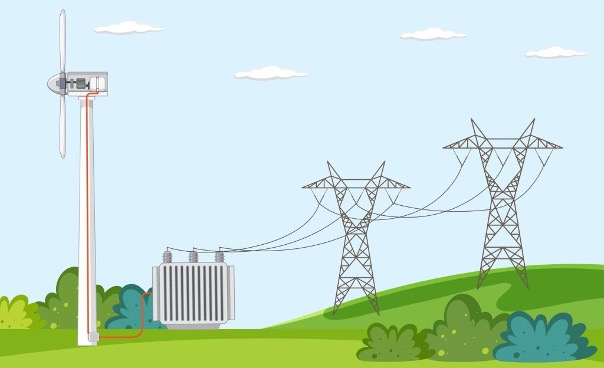
Electrical Energy Generation, Transmission and Distribution Using Electrical Transformer

Working Principle of Transformer

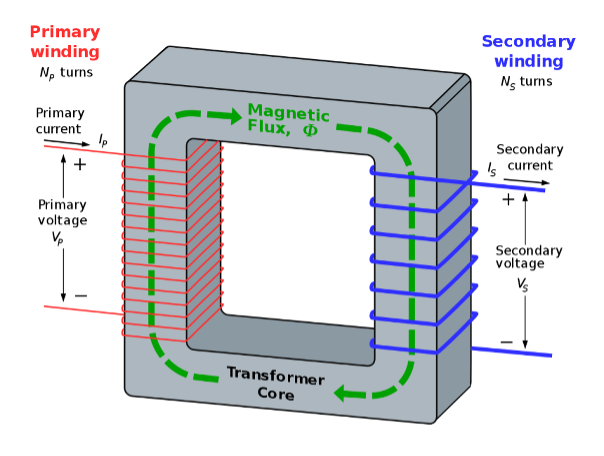
The working principle of transformer is based on Faraday’s Law of Electromagnetic Induction. A transformer consists of two main windings — the primary winding (input side) and the secondary winding (output side) — wound around a common magnetic core made of laminated silicon steel sheets.

When an alternating voltage is applied to the primary winding, it creates a changing magnetic field in the core. This magnetic flux links with the secondary winding and induces an electromotive force (EMF). The voltage induced in the secondary winding depends on the turns ratio between the primary and secondary windings.

  • If the secondary winding has more turns than the primary, the output voltage increases → step up transformer
  • If the secondary winding has fewer turns than the primary, the output voltage decreases → step down transformer

Power remains approximately constant (P = V × I), while voltage and current change inversely. This fundamental relationship allows transformers to efficiently manage voltage levels throughout the power grid while minimizing energy losses.

working principle of transformer
Working Principle of Electrical Transformer

Advantages of Transformers

Transformers offer several important advantages compared to other electrical machines:

  • No moving parts, resulting in very high reliability and low maintenance
  • Extremely high efficiency, often reaching 99% or higher
  • Excellent voltage regulation
  • Ability to handle very high power ratings
  • Long operational life with proper maintenance

Because transformers have no rotating components, they experience significantly less mechanical wear and can operate continuously for decades with minimal intervention.

Types of Transformer

Transformers are classified in several ways depending on their construction, cooling method, and application.

According to Number of Phases:

  • Single-phase transformers are commonly used in residential applications, small loads, and electronic circuits.
  • Three-phase transformers are the standard in power generation, transmission, and industrial distribution systems due to their higher efficiency and power handling capability.

According to Cooling and Insulation Method:

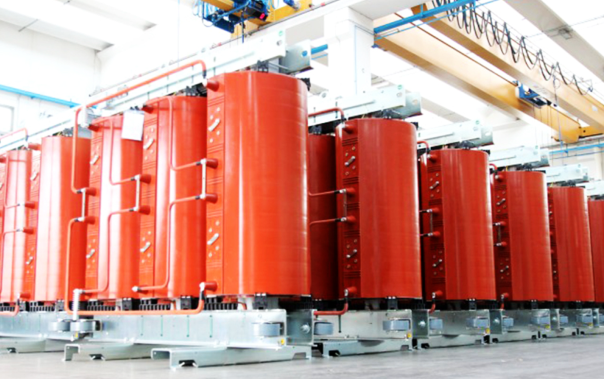
  • Dry type transformers use air or solid insulation. They are preferred in indoor locations such as hospitals, schools, shopping centers, and commercial buildings because they pose no fire or explosion risk.
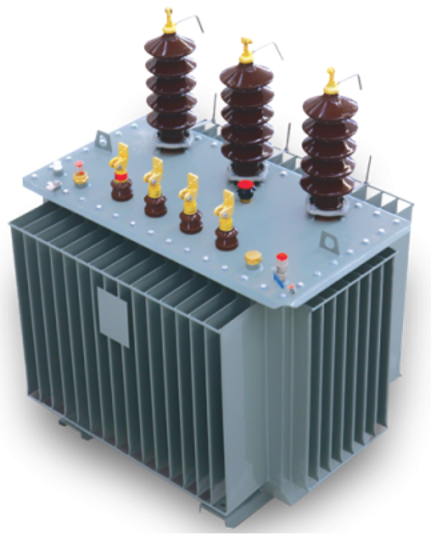
  • Oil type transformers use mineral oil or ester-based fluids for both insulation and cooling. They are widely used in outdoor substations, industrial plants, and high-power applications due to their superior cooling performance and higher power ratings.

According to Application:

  • Power transformers are used in generation and transmission networks. They typically have ratings from 5 MVA up to several hundred MVA and operate at high voltage levels.
  • Distribution transformers step down medium voltage to low voltage (usually 400V) for end consumers. They generally have ratings up to 5 MVA.
  • Step up and step down transformers are used to increase or decrease voltage levels as required by the power system.
  • Instrument transformers (current transformers and voltage transformers) are used for measurement and protection purposes.
  • Special purpose transformers include isolation transformers, rectifier transformers, furnace transformers, and autotransformers.
transformer 1
Oil Type Transformer

Transformer Efficiency and Winding Materials

Modern electrical transformers achieve very high efficiency levels. The choice of winding material plays an important role in both cost and performance. While copper was traditionally preferred for its excellent conductivity, aluminum windings have become increasingly popular due to lower material cost and improved manufacturing technology. Today’s high-quality aluminum wound transformers can achieve performance levels very close to copper wound units.

Even small improvements in transformer efficiency have a major impact on overall system losses because thousands of transformers operate continuously across the grid.

Role of Transformers in Power Systems

Transformers are essential at every stage of the electrical power chain:

  • At power plants, step up transformers increase generator voltage for efficient long-distance transmission.
  • In transmission networks, power transformers maintain optimal voltage levels.
  • In distribution networks, step down transformers reduce voltage to safe levels for consumers.
  • In industrial facilities, specialized transformers supply the exact voltage and power quality required by sensitive equipment.

The electrical transformer remains one of the most important inventions in electrical engineering. Its simple yet highly effective working principle, combined with high efficiency and reliability, makes it indispensable in modern power systems. Whether it is a large power transformer in a transmission substation or a dry type transformer inside a commercial building, transformers enable the safe, efficient, and economical delivery of electrical energy from generation to consumption.

Understanding the working principle of transformer, different types of transformer, and their applications helps engineers and project owners make the right selection for their specific needs.

transformer 2
Dry Type Transformer

Looking for Electrical Transformer for your project?

Looking for high-quality electrical transformer, power transformer, step down transformer, or complete solutions for types of transformer? We provide expert technical support for all your power distribution and industrial transformer needs.

For quotations and requests: info@electricistanbul.com

Whatsapp: +90 501 076 69 91

mobile substation 1

What is Mobile Substation?

Mobile Substation – What is a Mobile Substation?

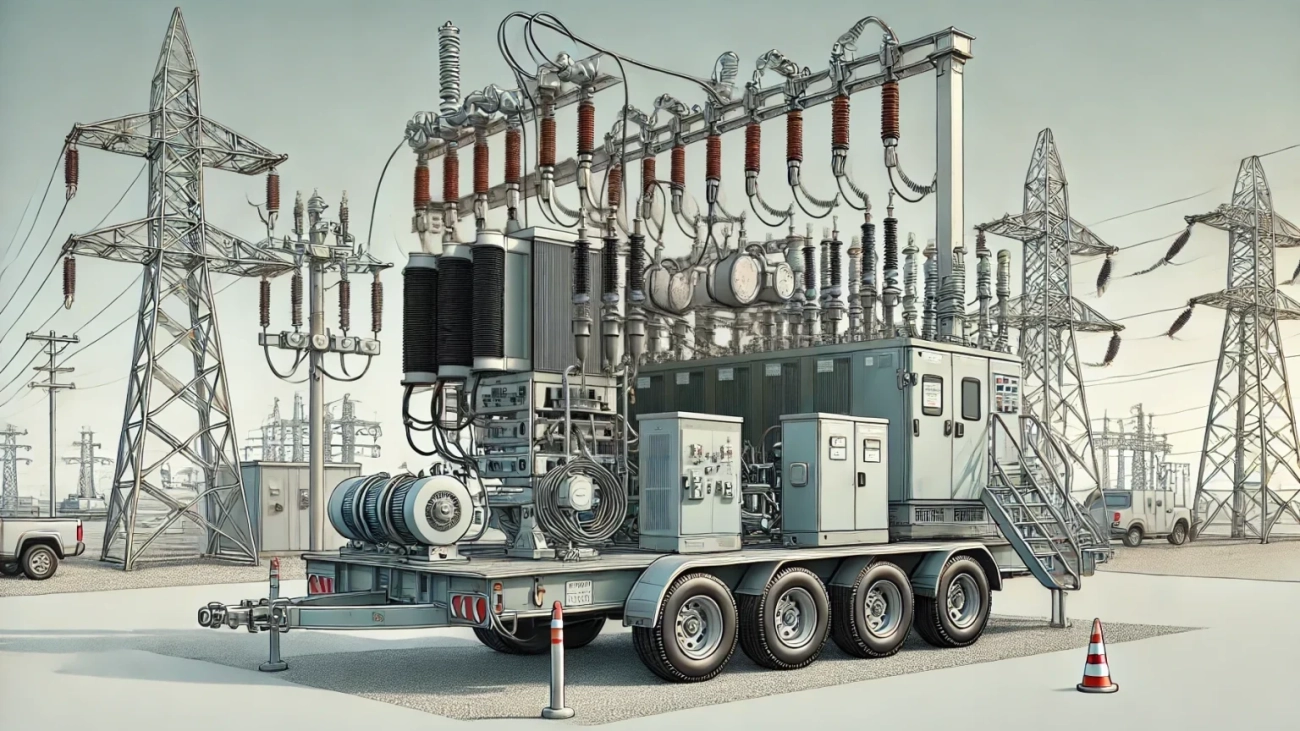
A mobile substation, also known as a mobile transformer in technical literature, is a portable transformer unit used in the transmission and distribution of electrical energy. These compact systems are mounted on wheeled platforms and are specifically designed to meet temporary or emergency power needs.

Advances in science and technology play a critical role in minimizing power outages. Modern societies can no longer tolerate prolonged electricity interruptions. From households to hospitals, factories, and schools, reliable power supply has become essential. In the event of outages, mobile substations provide an effective solution to keep consumers energized.

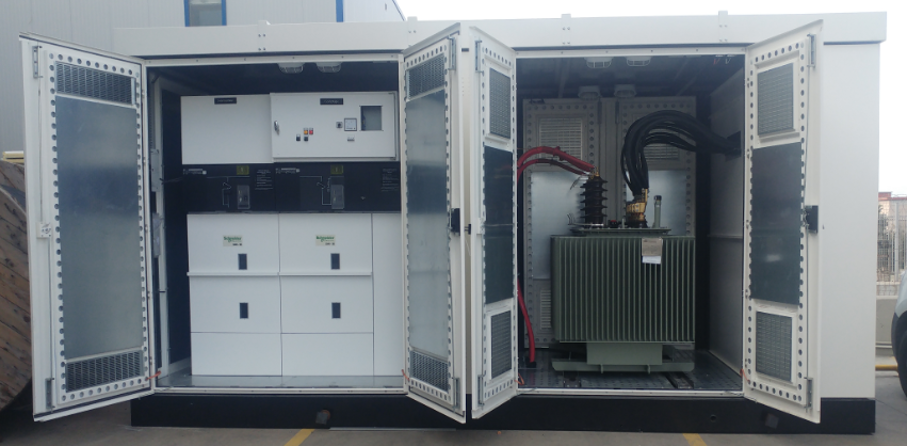
Mobile Substation MV Switchgear and MV Transformer Rooms

Mobile Substation MV Switchgear and MV Transformer Rooms

Why Do We Use Mobile Substations?

Mobile substations serve as temporary power solutions during maintenance, repair, or replacement of fixed transformer substations. While the main substation is being upgraded or repaired, the affected region can continue to receive power through a mobile substation.

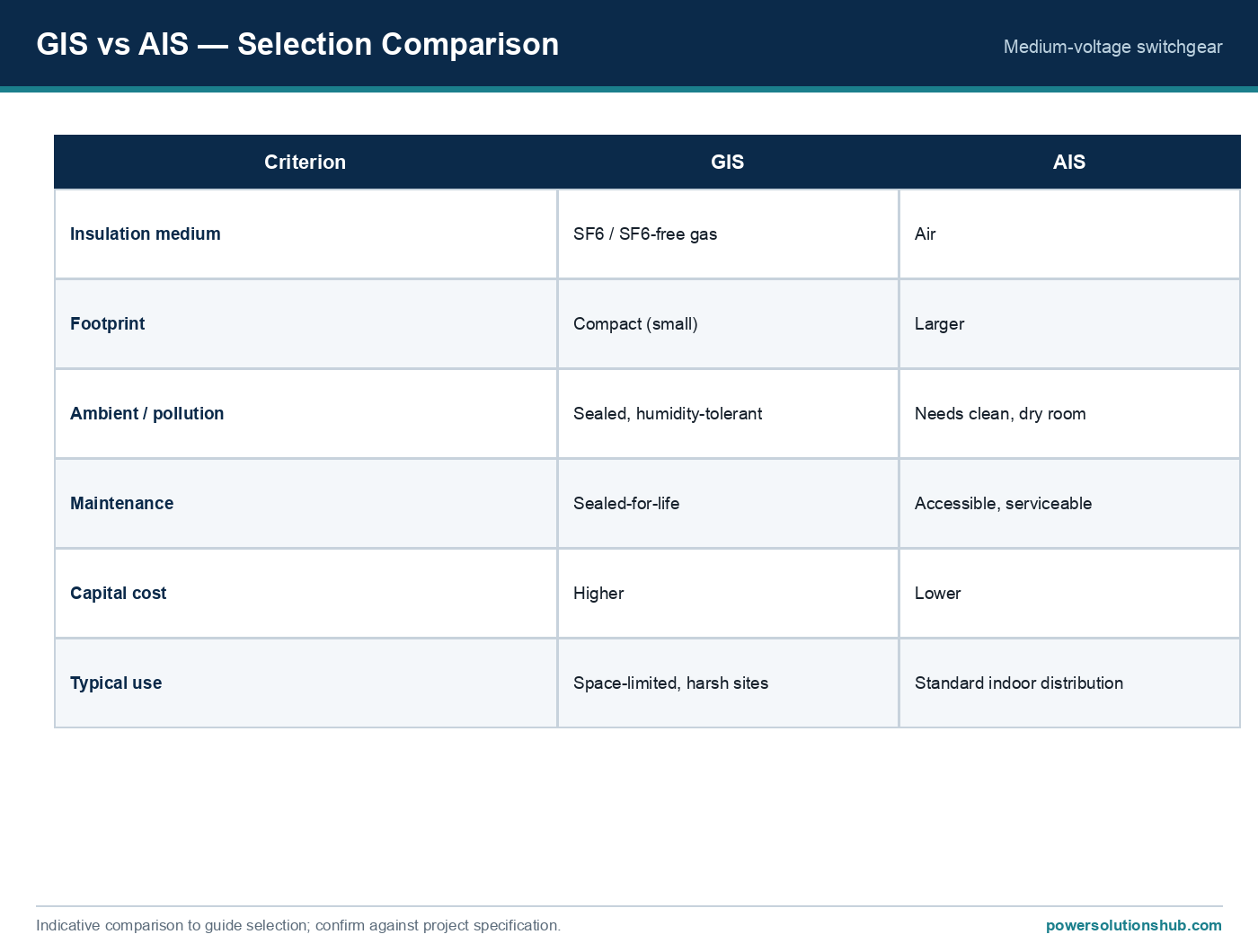
There are various types of fixed substations: building-type substations, GIS substations (Gas Insulated Switchgear), metal kiosk substations, open-type substations, and step-up/step-down substations. Replacing old open-type substations with modern, TEDAŞ-compliant modular or GIS-type substations requires time for factory testing, site installation, and commissioning. During this period, mobile substations provide seamless temporary power.

In addition to maintenance, mobile substations are widely used when there is a sudden increase in power demand — for example, due to population growth or migration waves. They are also critical during natural disasters (earthquakes, storms, floods), wars, or major transformer failures.

ABB mobile substation solutions and other leading mobile transformer manufacturers are frequently preferred in such strategic applications.

Advantages of Mobile Substations vs GIS and Building-Type Substations

Mobile substations are generally used at high voltage levels such as 380 kV or 154 kV (especially TEİAŞ 154 kV systems in Turkey) and are typically GIS-type (gas-insulated). They are lighter than building-type or prefabricated (PB-1) substations and can be easily connected to open-type switchyards.

Key application areas include:

  • Natural disasters (earthquakes, floods, hurricanes)
  • Wars and conflict zones (transformers are often primary targets)
  • Large construction projects (tunnels, dams, mining sites)
  • Remote military bases and industrial facilities
  • Emergency backup and rapid capacity increase

In long-distance power transmission for high-power requirements (e.g., 2–10 km construction sites), using medium voltage via mobile substations is much more efficient and cost-effective than low-voltage distribution due to lower losses and reduced cable cross-sections.

Mobile Substation Design and Engineering

A well-designed mobile substation includes:

  • Medium Voltage (MV) and Low Voltage (LV) single-line diagrams
  • High-quality circuit breakers, disconnectors, measuring transformers, protection relays, surge arresters, and modular cells
  • Properly calculated cable cross-sections
  • LV distribution panels and battery-rectifier systems
  • Robust metal enclosure with optimal equipment layout
  • Advanced grounding system

Example Technical Study (Published Research):

“Designing of a compact mobile substation and short-circuit analysis in a real distribution system” Published in International Transactions on Electrical Energy Systems, June 2021 DOI: https://doi.org/10.1002/2050-7038.12903

In this academic study, a 1600 kVA, 34.5/0.4 kV mobile substation was designed and its short-circuit performance was analyzed using MATLAB Simulink. Two scenarios were simulated:

  1. Direct connection to an infinite bus (100 MVA short-circuit power)
  2. Integration into a real distribution network in Beykoz, Istanbul (fed from 380/34.5 kV GIS substation)

Both symmetrical (three-phase) and asymmetrical (phase-to-ground, phase-to-phase) short-circuit conditions were analyzed. The selected equipment successfully withstood the worst-case short-circuit currents, proving the design’s reliability.

Mobile Substation Views

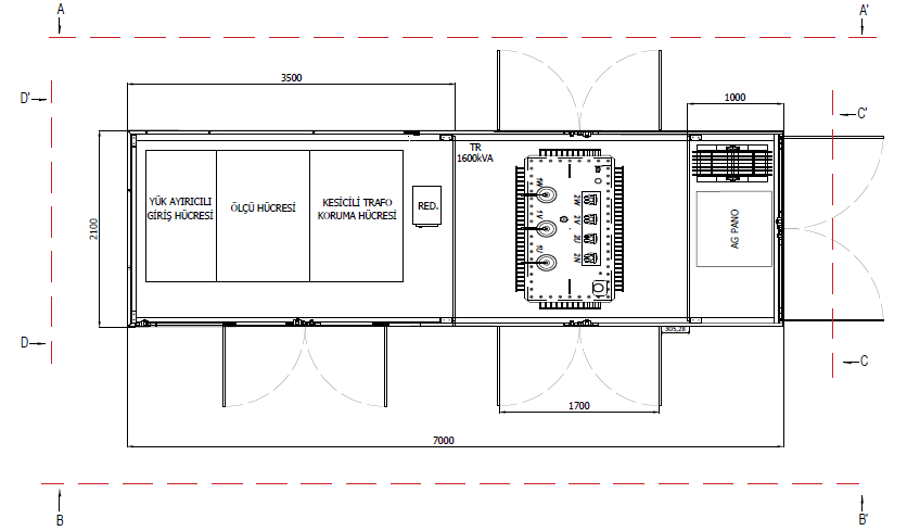
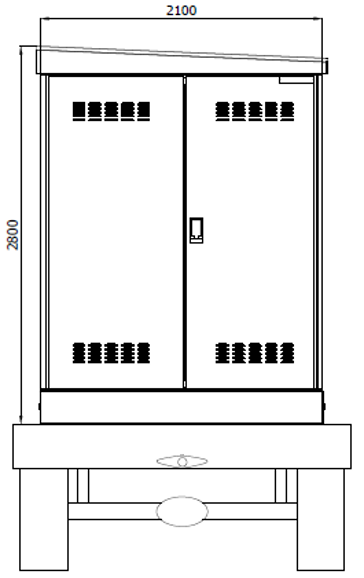
  • Top View
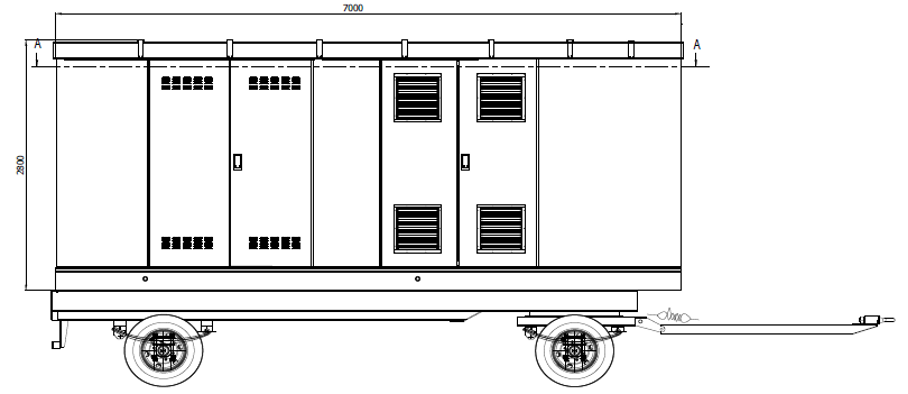
  • Side View
  • Rear View (LV Room)
mobile substation 3
Mobile Substation Top View
mobile substation 4
Mobile Substation Side View
mobile substation 5
Mobile Substation Rear View

Looking for Reliable Mobile Substation Manufacturers?

If you are searching for high-quality mobile substations, mobile transformers, or ABB mobile substation solutions in Saudi Arabia, Egypt, Libya, Pakistan, or Romania, this comprehensive guide provides essential technical information.

Modern mobile substations offer fast deployment, high reliability, and excellent performance in emergency and temporary power applications. Leading global manufacturers and local partners can deliver customized solutions according to your voltage level, power capacity, and environmental requirements.

For quotations and requests: info@electricistanbul.com

Whatsapp: +90 501 076 69 91