
An electrical panel IP rating is a two-digit code defined by IEC 60529 that quantifies how well an enclosure keeps out solid objects (first digit) and water (second digit), while a companion IK rating under IEC 62262 describes the enclosure’s resistance to mechanical impact — together these codes are the standard engineering language for specifying panel and distribution-board protection levels. This guide walks through what the digits mean, how to derive the right rating from the installation environment, a worked selection example, and the pitfalls that cause premature enclosure failure in the field. It is relevant across all climates our team supports, including the Middle East and Gulf (incl. Egypt and Saudi Arabia), North Africa, CIS, and Sub-Saharan Africa, where dust ingress, humidity, and coastal salt-spray each demand a different IP/IK strategy.
Electrical panels sit at the interface between upstream switchgear (see our switchgear hub) and downstream loads, often housing protection relays (see our protection relay guide) and feeding or receiving power from distribution transformers (see our transformer hub). Because panels are frequently installed outdoors, in plant rooms, or in harsh industrial areas, correctly specifying ingress and impact protection is as important as specifying the busbar rating itself.
How the IP and IK codes work
IP code structure (IEC 60529): IP + first digit (0–6) + second digit (0–9, sometimes with letters K or NK for special test methods).
- First digit — protection against solid objects and dust: 0 = no protection, up to 6 = fully dust-tight.
- Second digit — protection against water: 0 = no protection, up to 9 (or 9K) = protection against high-pressure, high-temperature water jets.
A panel rated IP54, for example, is “dust-protected” (ingress of dust is not entirely prevented but not in sufficient quantity to interfere with satisfactory operation) and protected against “splashing water from any direction.” A panel rated IP65 is fully dust-tight and protected against low-pressure water jets from any direction.
IK code structure (IEC 62262): IK + a single digit from 00 to 10, each corresponding to a defined impact energy delivered to the enclosure surface in joules, from IK00 (no protection) up to IK10 (the highest standardized impact energy in the scale). The IK rating tells the specifier how much mechanical shock — from a dropped tool, a swinging gate, vandalism, or routine maintenance knocks — the enclosure can absorb without structural or functional damage.
The selection formula (decision logic)
Unlike a short-circuit or thermal calculation, IP/IK selection is not a single algebraic formula — it is a matching exercise between environmental risk factors and code digits:
Required IP first digit  = f(dust loading, particulate size, airborne contamination)
Required IP second digit = f(rainfall exposure, washdown regime, flooding risk, humidity/condensation)
Required IK digit        = f(impact risk: vehicle traffic, vandalism, tool drops, vegetation, thermal/mechanical stress)
Each environmental factor is assessed against a checklist (outdoor vs indoor, coastal vs desert, public-access vs restricted plant room) and mapped to the minimum acceptable digit. The panel’s final designation must meet or exceed the required digit on both IP axes plus the IK axis — never average them.
Worked example: selecting IP/IK for a coastal substation panel
Suppose an engineer must specify a distribution panel for an outdoor, coastal substation enclosure in a Gulf-region site, with the following site conditions:
- Airborne sand and fine dust (desert proximity) → requires full dust-tightness.
- Periodic wash-down and wind-driven rain, plus occasional heavy downpours → requires protection against water jets, not just splashing.
- Enclosure installed behind a perimeter fence but accessible to maintenance vehicles and tools → moderate mechanical impact risk, not public vandalism-grade.
Step 1 — Solid-ingress digit. Because fine windblown sand is present, the enclosure must prevent dust ingress in a quantity that would interfere with internal electronics or contact surfaces. This points to the highest solid-ingress digit on the IEC 60529 scale (fully dust-tight), rather than a partial-protection digit intended for indoor, low-dust rooms.
Step 2 — Liquid-ingress digit. Because the site experiences wind-driven rain and wash-down (not submersion), the specifier needs a digit covering powerful water jets from any direction, which is a materially higher requirement than a digit that only covers light splashing. This rules out low second-digit values that are only adequate for sheltered indoor equipment.
Step 3 — Combine. Dust-tight + jet-water-protected combination gives a panel in the IP65–IP66 range, depending on whether the jets are low-pressure (IP65 territory) or more powerful/directional (IP66 territory per the IEC 60529 water-test schedule). The final choice is made by comparing the site’s actual wash-down pressure and nozzle distance against the IEC test parameters for each second-digit value.
Step 4 — IK digit. Given maintenance-vehicle and tool-drop risk but no public vandalism exposure, a mid-range IK digit (sufficient to survive incidental impacts from tools or minor vehicle contact, but not the top-of-scale vandal-resistant rating reserved for publicly accessible street cabinets) is proportionate. Over-specifying the top IK digit here would add unnecessary enclosure cost without matching the actual risk profile.
Result: the engineer specifies an outdoor panel with a dust-tight, water-jet-protected IP rating in the IP65/IP66 band, combined with a moderate IK rating sized to the maintenance-traffic risk — rather than guessing a “standard” number from habit.
IP digit reference and selection table
| IP first digit | Protection against solids (qualitative) | IP second digit | Protection against water (qualitative) |
|---|---|---|---|
| 0 | No protection | 0 | No protection |
| 2 | Protection against fingers/tools >12 mm | 1 | Protection against vertically dripping water |
| 4 | Protection against solid objects >1 mm | 4 | Protection against splashing water, any direction |
| 5 | Dust-protected (limited ingress, no harmful deposit) | 5 | Protection against low-pressure water jets |
| 6 | Dust-tight (no ingress) | 6 | Protection against powerful water jets |
| — | — | 7/8/9 | Protection against temporary/continuous immersion or high-pressure, high-temperature jets |
| IK digit range | Qualitative impact resistance | Typical application context |
|---|---|---|
| Low (IK00–IK04) | Minimal to light impact resistance | Indoor, restricted-access panels |
| Mid (IK05–IK08) | Moderate impact resistance | Plant rooms, maintenance-accessible outdoor panels |
| High (IK09–IK10) | Highest standardized impact resistance on the IEC 62262 scale | Publicly accessible, vandal-prone, or vehicle-adjacent locations |
Panel types and how IP/IK requirements differ
- Indoor low-voltage distribution boards in a dedicated electrical room: dust and splash risk is low, impact risk is low — a moderate IP digit combination and a low-to-mid IK digit are usually proportionate.
- Outdoor kiosk/cabinet panels feeding MV/LV transformers or ring main units: full exposure to rain, dust, and sun demands a dust-tight, jet-protected IP combination and a mid-to-high IK rating, especially near roadways.
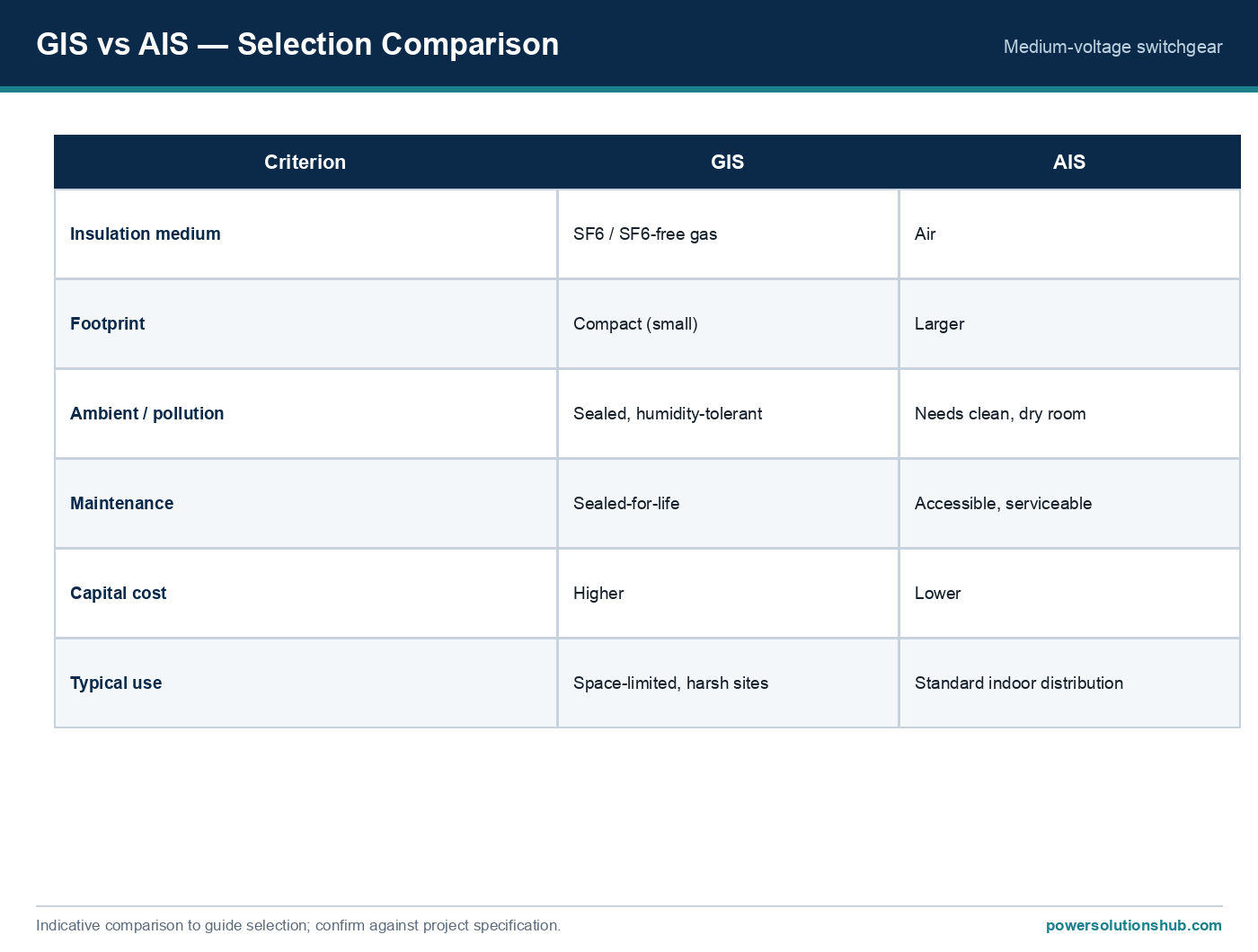
- Panels integrated with switchgear line-ups in a GIS or AIS yard: environmental exposure depends on whether the enclosure is itself outdoor-rated or housed within a building; the IP/IK requirement should be assessed per enclosure, not inherited from the switchgear’s own insulation class.
- Coastal and desert panels: salt-laden air and fine sand both push toward higher first- and second-digit IP values and corrosion-resistant enclosure materials/coatings, independent of the IK requirement.
- Panels in public or semi-public areas (street cabinets, substation perimeter equipment accessible without authorization): IK rating becomes the dominant selection driver, often pushing toward the top of the IK scale regardless of the IP level needed for weather alone.
Selection criteria and common pitfalls
- Do not average IP and IK requirements across a line-up. Each enclosure section (incoming, metering, outgoing) may face a different local risk and should be rated individually if conditions differ.
- Do not assume indoor equipment needs no IP/IK rating. Washdown areas, below-grade rooms prone to condensation, and dusty industrial halls all justify a rated enclosure even though they are “indoor.”
- Distinguish IP from environmental/chemical resistance. IP and IK codes address solids, water, and impact — they do not certify resistance to corrosive gases, UV degradation of plastics, or chemical spill resistance; those require separate material and coating specifications.
- Verify test method, not just the digit. Two enclosures both marked with the same second digit may have been tested with different nozzle distances or durations under IEC 60529; request the test certificate for critical installations.
- Match gasket and cable-gland IP class to the enclosure IP class. A dust-tight, jet-protected enclosure with an unrated or poorly fitted cable gland effectively downgrades the whole assembly to the weakest entry point.
- Re-verify IP/IK after field modification. Drilling extra glands, adding external louvers, or retrofitting ventilation fans can silently reduce a panel’s as-tested rating; any field modification should be re-assessed against the original certification.
Governing standards
- IEC 60529 — Degrees of protection provided by enclosures (IP Code): defines the first and second digit test methods and classifications referenced throughout this guide.
- IEC 62262 — Degrees of protection provided by enclosures for electrical equipment against external mechanical impacts (IK Code): defines the IK00–IK10 impact-energy scale.
- Panel design, internal clearances, and protection coordination should additionally reference the applicable low-voltage switchgear assembly or MV switchgear standards for the equipment housed inside, separate from the enclosure’s IP/IK classification.
Related guides
See also our guides on medium voltage switchgear, gas-insulated switchgear and metal-clad switchgear.
What does the first digit in an IP rating actually protect against?
It protects against ingress of solid objects and dust, ranging from large foreign objects down to fine dust particles, as defined by IEC 60529’s test series for solid-ingress protection.
What does the second digit in an IP rating protect against?
It protects against ingress of water, ranging from vertically dripping water up to powerful jets or, at the top of the scale, temporary or continuous immersion, per IEC 60529.
Is a higher IP or IK number always better?
Not economically. Over-specifying beyond the actual environmental and impact risk adds enclosure cost and weight without operational benefit; the goal is to match the digit to the documented risk, not to maximize it.
Can an IP-rated panel still fail from water or dust ingress?
Yes, if cable glands, gaskets, or field modifications are not maintained to the same class as the enclosure, or if the panel is installed in a more severe environment than it was rated for.
Does the IK rating replace the need for physical security fencing?
No. The IK rating protects the enclosure itself from impact energy; it does not substitute for site security measures such as fencing, locks, or restricted access where theft or tampering is a concern.
How do IP/IK ratings relate to switchgear or transformer specifications?
They are independent of the internal electrical ratings (voltage, short-circuit current) of the switchgear or transformer housed inside; a panel’s IP/IK class concerns the enclosure boundary, while insulation and short-circuit withstand concern the equipment inside.
Should IP/IK selection differ between hot/dusty and cold/humid climates?
Yes — hot, dusty, coastal environments typically push toward higher dust-tightness and water-jet digits plus corrosion-resistant materials, while cold, humid environments emphasize condensation control and sealing against driven rain or snow ingress.
Looking for electrical panels and distribution boards?
Looking for high-quality electrical panels and distribution boards? We provide expert engineering support and reliable products for all your medium voltage needs.
For quotations and requests: info@electricistanbul.com
WhatsApp: +90 501 076 69 91