
DVCAS MV switchgears are gas-insulated medium-voltage switchgear units, part of Schneider Electric’s SM AirSeT/GIS portfolio, engineered for secondary distribution networks up to 36/38 kV, built around a sealed-for-life stainless-steel tank that keeps live medium-voltage parts insulated and disconnected from ambient conditions. This article covers the DVCAS product architecture, application segments, safety and reliability features, standards compliance, and buyer selection criteria for procurement teams. For engineering, procurement and construction (EPC) contractors and utilities sourcing ring main units (RMUs) across the Middle East and Gulf region including Egypt and Saudi Arabia, North Africa, the CIS, and Sub-Saharan Africa, DVCAS is positioned as a compact, factory-tested solution for demanding grid, industrial, and renewable energy environments.
What Is DVCAS MV Switchgear?
DVCAS is Schneider Electric’s gas-insulated switchgear (GIS) range for secondary distribution, cataloged for voltages up to 36/38 kV. The design integrates disconnector, circuit breaker, and load-break switch functions within a single sealed enclosure, using a familiar three-position switching mechanism (closed, open, earthed) with full mechanical and electrical interlocking to prevent incorrect operating sequences. Because the switchgear ships 100% factory tested for the Compact range, no additional on-site testing is required before commissioning, which shortens installation timelines for export projects where local test infrastructure may be limited.
The core of the DVCAS design is a stainless-steel, fully grounded tank rated to an IP65 ingress protection level, sealed for life for a stated service duration of 40 years. This sealed architecture protects busbars and live components from moisture, dust, and corrosive atmospheres — an important consideration for coastal, desert, and industrial deployment sites common across GEO export markets.
Range Architecture and Functional Modules
DVCAS is structured around modular functional units that can be combined to build a full ring main unit or distribution panel:
- Line functions (D0/ID, ID0/IID, IID0/IIID) — used for incoming/outgoing ring connections in radial and ring-main network topologies, as illustrated in the wind farm collecting substation configurations described in the source documentation.
- Transformer protection function — combined incoming line and transformer protection module, typically paired with a circuit breaker for step-down MV/LV substations.
- Circuit breaker module — for transformer and feeder protection duties.
- Load-break switch and disconnector modules — for ring switching and isolation.
This modularity allows the same DVCAS platform to be reconfigured for solar farm ring architectures, wind turbine array feeders, data center distribution rings, and electro-intensive powerhouse feeders without requiring a different base product line.
Key Specification Table
| Parameter | DVCAS Specification |
|---|---|
| Rated voltage | Up to 36/38 kV |
| Enclosure ingress protection | IP65 |
| Internal arc withstand duration | 1 second |
| Internal arc test standard/class | IEC 62271-200, IAC AFL/AFLR |
| Seismic withstand | IEEE 693-2005, 0.5g (High seismic performance, ETGI 1020) |
| Tank sealed service life | 40 years |
| Factory testing (Compact range) | 100% factory tested, no on-site testing required |
| Switching positions | 3-position: closed / open / earthed |
Selection Criteria for DVCAS MV Switchgear
Buyers evaluating DVCAS or comparable gas-insulated RMUs for a project should assess the following:
1. Rated voltage match to network class. Confirm the project’s nominal system voltage falls within the DVCAS range up to 36/38 kV, and align functional module selection (line, transformer protection, circuit breaker) with the single-line diagram of the substation.
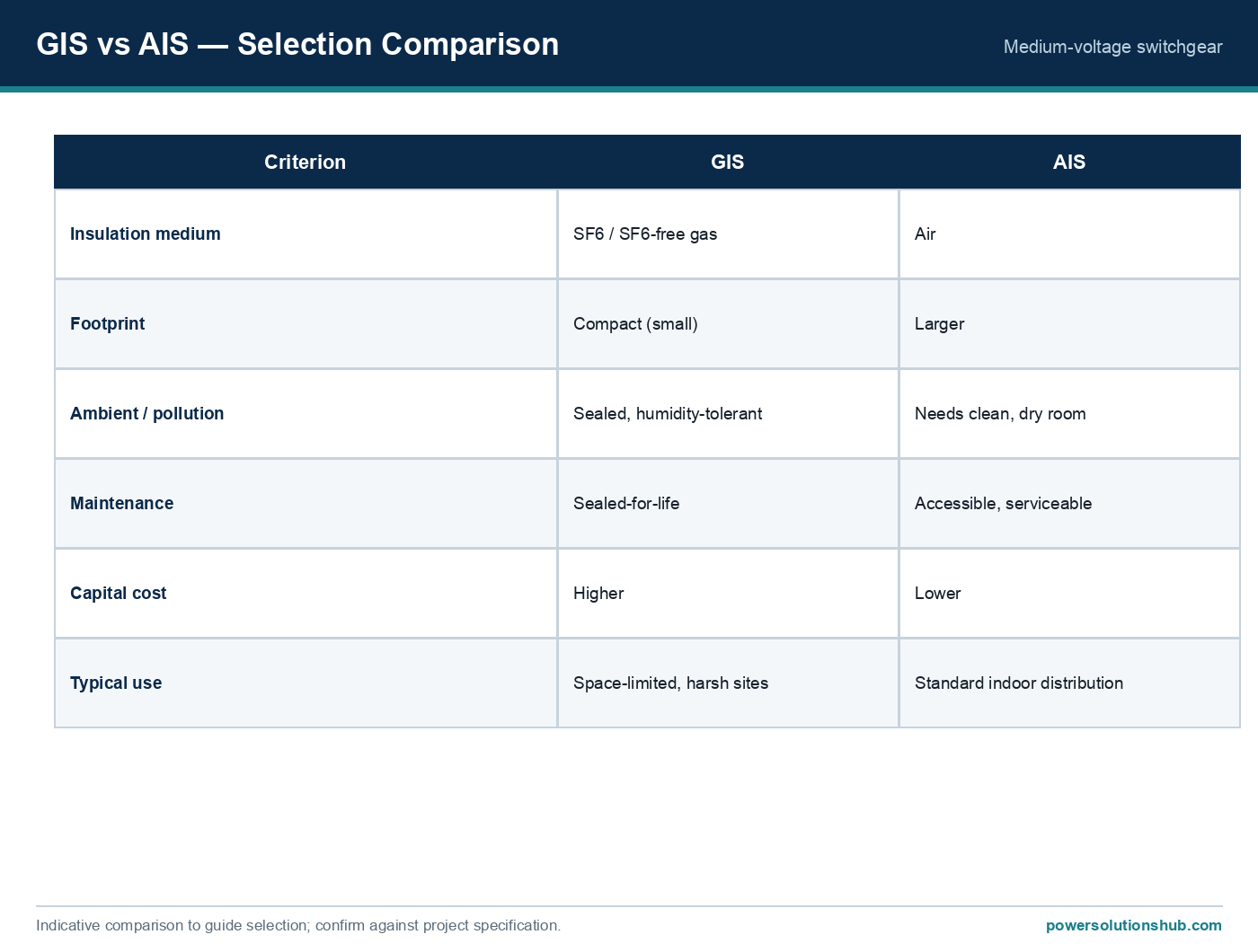
2. Environmental exposure and enclosure protection. For coastal, desert, or high-humidity sites, the IP65-rated sealed tank is a differentiator versus air-insulated alternatives, since disconnection and insulation performance are preserved independent of ambient conditions.
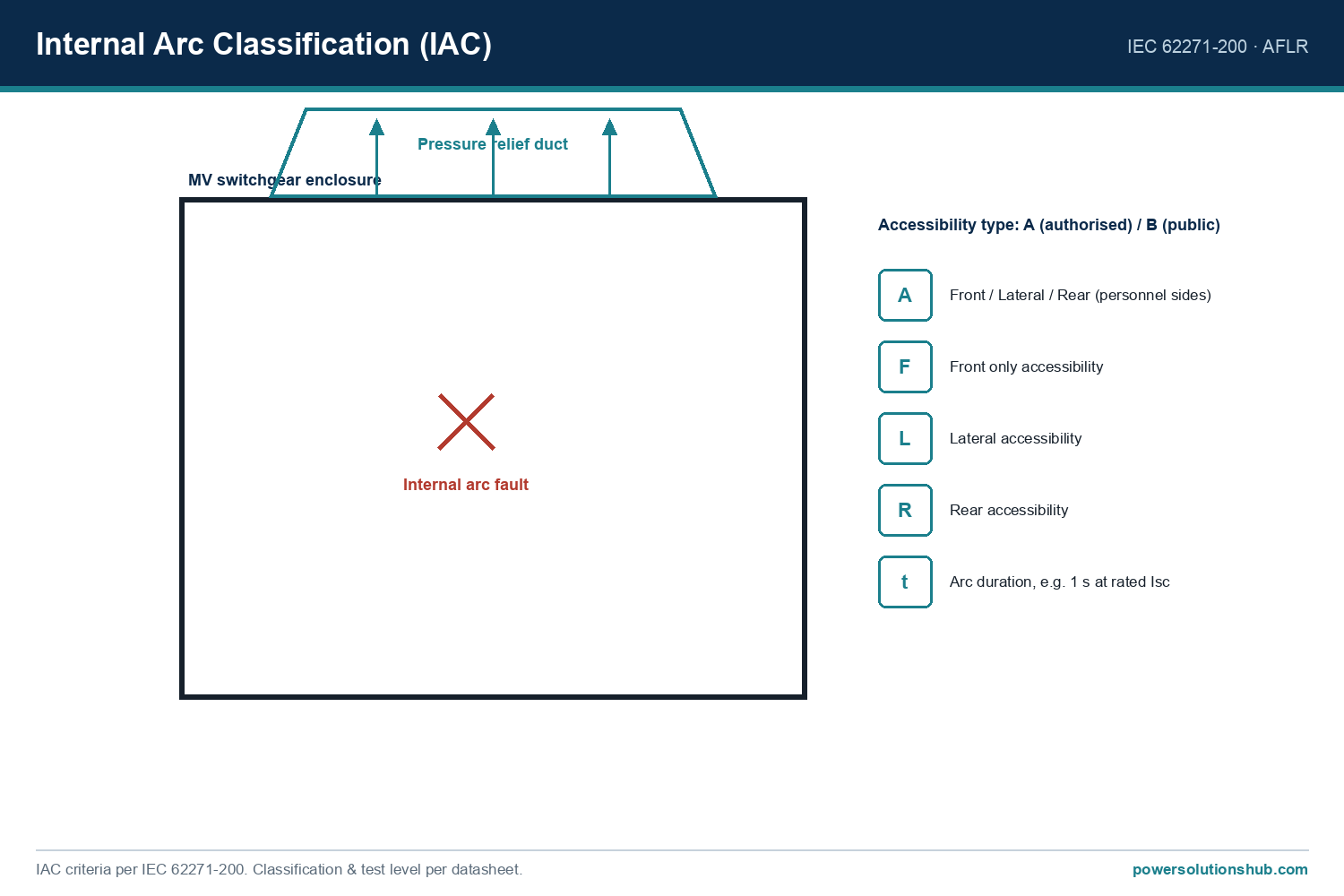
3. Internal arc safety requirements. Where personnel safety codes or utility specifications mandate arc-fault-tested switchgear, confirm testing against IEC 62271-200 with IAC AFL/AFLR classification, and note that overpressure from an internal arc event is managed through an overpressure relief valve at the base of the metal enclosure.
4. Seismic zone requirements. For projects in seismically active regions, verify seismic qualification — DVCAS has been tested per IEEE 693-2005 at 0.5g along with vibration withstand for transport and end-of-life conditions.
5. Commissioning timeline. Where local test facilities are limited or project schedules are tight, the 100% factory-tested Compact range reduces field commissioning workload — a relevant advantage for remote wind, solar, or mining sites across export markets.
6. Digital and metering integration. For data centers and electro-intensive facilities, confirm whether Low-Power Voltage Transformer (LPVT) busbar metering and Low-Power Current Transformer (LPCT) integration are required for protection accuracy and remote monitoring.
Applications
Data centers and mega factories. Large-scale data centers depend on one or two MV substations feeding multiple internal distribution rings via ring main units. DVCAS supports high-density power distribution, flexible outdoor or powerhouse installation, advanced protection schemes, remote monitoring, LPVT busbar voltage metering, and LPCT integration for reduced footprint. Documented deployment includes over 1,000 data center stations equipped with DVCAS.
Wind farms (onshore and offshore). Wind farms typically use a radial network configuration valued for simplicity, cost-effectiveness, and smooth commissioning. DVCAS supports installation either inside the turbine tower or in a separate substation, requires no on-site configuration, and offers internal arc withstand with upward or downward exhaust options. The source documentation reports over 40,000 MW installed worldwide and more than 18,000 wind turbines equipped with DVCAS.
Solar and battery storage (BESS) farms. Solar farm MV distribution is typically built from multiple LV/MV transformer substations grouped into PV power station units and interconnected in a loop configuration, with a single-line diagram including two line functions and one transformer-protection function equipped with a circuit breaker. DVCAS offers an optimized footprint suited to skid or container integration and flexible configurations for varied substation architectures. Over 1,000 solar and BESS stations are equipped with DVCAS.
Electro-intensive industries (energy, chemical, mining, minerals, metals). These sites demand highly reliable power supply with minimal downtime. DVCAS is compatible with powerhouse installation, supports remote monitoring and control, adapts to high-density layouts, and integrates LPVT and LPCT technology. Over 500 electro-intensive stations are equipped with DVCAS.
Oil & gas. DVCAS also serves secondary distribution networks within oil extraction plants and refineries, covering both onshore and offshore installations.
Commercial and industrial buildings. Industrial and infrastructure sites, along with hospitals, represent additional deployment segments for the DVCAS range.
Safety, Reliability, and Standards Compliance
Operational safety in DVCAS is built around mechanical and electrical interlocks that prevent incorrect switching sequences, a simple front-access design for all operations, and full factory testing for the Compact range that eliminates the need for further on-site tests. Internal arc protection is verified against IEC 62271-200 with IAC AFL/AFLR classification, and the switchgear is designed to withstand internal arc events supplied by defined short-circuit current levels for a duration of 1 second, with overpressure managed through a relief valve at the base of the enclosure to protect operators.
The gas-insulated stainless-steel enclosure carries an IP65 ingress protection rating and is sealed for a stated 40-year service life, preventing operator contact with MV live parts. For projects in seismically active regions, DVCAS has been tested to IEEE 693-2005 at a seismic level of 0.5g, described as high seismic performance under ETGI 1020, along with vibration withstand testing covering both end-of-life conditions and vibrations experienced during transport.
Schneider Electric positions DVCAS within a broader track record of 190 years of innovation in delivering reliability, simplicity, and flexibility to industrial and utility customers worldwide.
EcoStruxure Digital Readiness
DVCAS supports EcoStruxure-ready integration, enabling remote monitoring, supervisory control, and reduced downtime for operators managing distributed MV assets across ring main network topologies. Combined with LPVT busbar voltage metering and LPCT current sensing, this allows accurate protection and real-time visibility without the footprint penalty of conventional instrument transformers.
Related guides
See also our guides on metal-clad switchgear, air-insulated switchgear and MV protection relays.
What voltage range does DVCAS MV switchgear cover?
DVCAS is cataloged for secondary distribution applications up to 36/38 kV, covering typical MV ring main unit and substation feeder duties.
Is DVCAS tested for internal arc faults?
Yes. DVCAS is tested against internal arcs according to IEC 62271-200, with an IAC AFL/AFLR classification, and is designed to withstand the arc for 1 second with overpressure relief to protect operators.
Does DVCAS require on-site commissioning tests?
No. The Compact range ships 100% factory tested, eliminating the need for further testing on site before energization.
What ingress protection rating does the DVCAS tank carry?
The stainless-steel, gas-insulated tank carries an IP65 rating, keeping disconnection and insulation performance independent of ambient dust, moisture, and pollution levels.
Is DVCAS suitable for seismic zones?
Yes. DVCAS has been tested to IEEE 693-2005 at a 0.5g seismic level, classified as high seismic performance under ETGI 1020, along with vibration withstand testing for transport and end-of-life conditions.
What industries use DVCAS switchgear?
Documented deployments span data centers, wind and solar renewable plants, electro-intensive industries (mining, chemical, energy), oil & gas facilities, and commercial/industrial buildings including hospitals.
How long is the DVCAS tank sealed for?
The stainless-steel tank is sealed for life, rated for a stated service life of 40 years, preventing any operator contact with MV live parts throughout its operating life.
Looking for DVCAS MV Switchgears?
Looking for high-quality dvcas mv switchgears? We provide expert engineering support and reliable products for all your medium voltage needs.
For quotations and requests: info@electricistanbul.com
WhatsApp: +90 501 076 69 91