
What is Short Circuit? Understanding Short Circuit Meaning and Definition in Power Systems
A short circuit is one of the most critical faults in electrical power systems. According to international standards such as IEC and IEEE Std. 100-1992, a short circuit occurs when two or more points in an electrical circuit that normally operate at different voltages come into unintended contact through a path of very low resistance or impedance. This creates an abnormal, high-magnitude current flow known as short circuit current.
In simple terms, the short circuit meaning refers to a situation where the normal load path is bypassed, allowing current to take the path of least resistance. The magnitude of this current is determined by the total impedance between the power source and the fault location. When impedance drops dramatically, the current can reach several times its normal value within milliseconds, generating intense heat and powerful electromagnetic forces.
What is a short circuit in practical terms? It typically happens between phases (line-to-line), between a phase and neutral, or between a phase and ground (earth). In medium and high-voltage networks, these faults often begin as single-phase events and can rapidly evolve into more severe multi-phase faults through arcing.
Common Causes of Short Circuits
Short circuits can result from both internal and external factors. Internal causes include insulation degradation due to aging, manufacturing defects, or excessive thermal stress from overloading. Overvoltages can also puncture insulation, creating conductive paths.
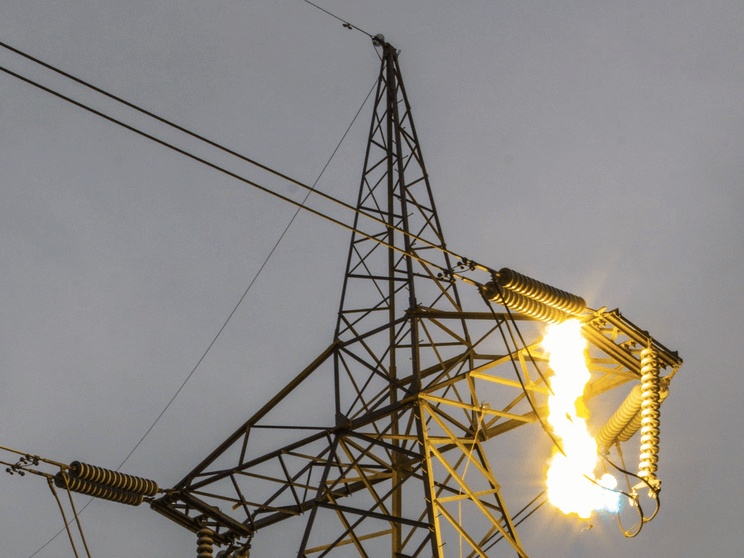
External causes are more varied and often unpredictable. These include physical damage to cables or overhead lines, lightning strikes on transmission systems, broken insulators, contamination combined with moisture, bird contact on live parts, or even animals entering transformer substations. Human errors during maintenance, such as leaving earthing switches closed when re-energizing equipment, are another frequent trigger.
Types of Short Circuit Faults
Power system engineers classify short circuit faults into four main categories:
- Three-phase short circuit (symmetric fault)
- Phase-to-phase short circuit
- Phase-to-ground (single line to ground) short circuit
- Phase-to-phase-to-ground (double line to ground) short circuit
The three-phase short circuit is symmetrical and produces the highest current magnitude, though it occurs less frequently. In contrast, phase-to-ground faults account for more than 50% of all short circuit events in distribution networks and are asymmetrical in nature. Accurate short circuit calculations for each type are essential for proper equipment sizing and protection coordination.
Effects and Dangers of Short Circuits
The consequences of a short circuit can be severe. The sudden high current produces intense thermal stress (I²t heating) and dynamic mechanical forces that can damage cables, busbars, transformers, and switchgear. In severe cases, this leads to equipment failure, prolonged power outages, fires, or even explosions inside transformer rooms or switchgear panels.
In populated areas, these faults pose serious risks to human life. Without proper protection, a short circuit can escalate into arc flash incidents with devastating effects.
Short Circuit Protection and Coordination
Effective protection against short circuits relies on correctly rated switching devices. Circuit breakers are the primary protection elements in both low-voltage and medium-voltage systems. Engineers determine the required short circuit breaking capacity (in kA) through detailed calculations using software such as ETAP or PSCAD. The selected breaker must safely interrupt the maximum possible short circuit current at its location.
Selectivity (or discrimination) is equally important. Protection devices must be coordinated so that only the device closest to the fault operates, minimizing the affected area and maintaining supply continuity elsewhere in the network.
Additional methods to limit short circuit current include neutral earthing resistors or reactors connected to transformer star points, and shunt reactors installed on transmission lines. These techniques reduce fault current magnitude, thereby lowering the stress on equipment.
Short Circuit Testing in Transformers
The short circuit test on a transformer (also called impedance test) is a standard factory and commissioning procedure used to determine the transformer’s equivalent impedance, copper losses, and short circuit current contribution. During this test, one winding is short-circuited while reduced voltage is applied to the other winding. The results are critical for short circuit studies and protection settings in the wider power system.
Prevention Strategies for Short Circuits
Preventing short circuits requires a combination of good design, quality installation, and regular maintenance. Key measures include using properly rated and insulated equipment, implementing robust earthing systems, installing surge protection, conducting periodic insulation resistance testing, and ensuring strict safety procedures during switching operations. In overhead lines, bird guards, insulator cleaning programs, and vegetation management also play important roles.
Modern digital protection relays with advanced algorithms further enhance detection speed and accuracy, enabling faster fault clearance and reduced damage.
Understanding Short Circuits for Reliable Power System Design
A thorough understanding of short circuit phenomena, from basic definition to detailed fault analysis and protection coordination, is essential for every electrical engineer and system designer. Proper calculation of short circuit currents, correct selection of protective devices, and implementation of current-limiting techniques significantly reduce risks to equipment and personnel while improving overall system reliability.
Looking for Short Circuit Protection Solutions for your project?
Looking for reliable short circuit analysis, protection coordination studies, or correctly rated circuit breakers and transformers for your electrical installation? We provide expert engineering support and high-quality equipment tailored to your system requirements.
For quotations and requests: info@electricistanbul.com
Whatsapp: +90 501 076 69 91